Learn to FlyAbove the South Downs
Feel the silence of engine-free flight above the Sussex countryside. Join one of the UK's oldest gliding clubs and discover the world's purest form of flying.
Never flown before?
You don't need any flying experience, special fitness, or prior knowledge to try gliding. Sailplanes (also known as gliders) are light, engineless aircraft that ride rising air currents. Most of our recent joiners had never set foot in any aircraft before.
Book an Introductory Flight
A 15-20 minute flight with an experienced pilot. You'll get a full briefing, experience the launch, and enjoy the South Downs from the air. Allow at least two hours at the airfield.
Try Club Life for a Month
Your introductory flight includes one month's full club membership. Fly at member rates, use the simulator, and discover what life at Parham is really like.
Join & Start Training
Loved it? Convert to annual membership and your joining fee is waived. Your instructor will guide you through the Sailplane Pilot Licence (SPL) training programme at whatever pace suits you.
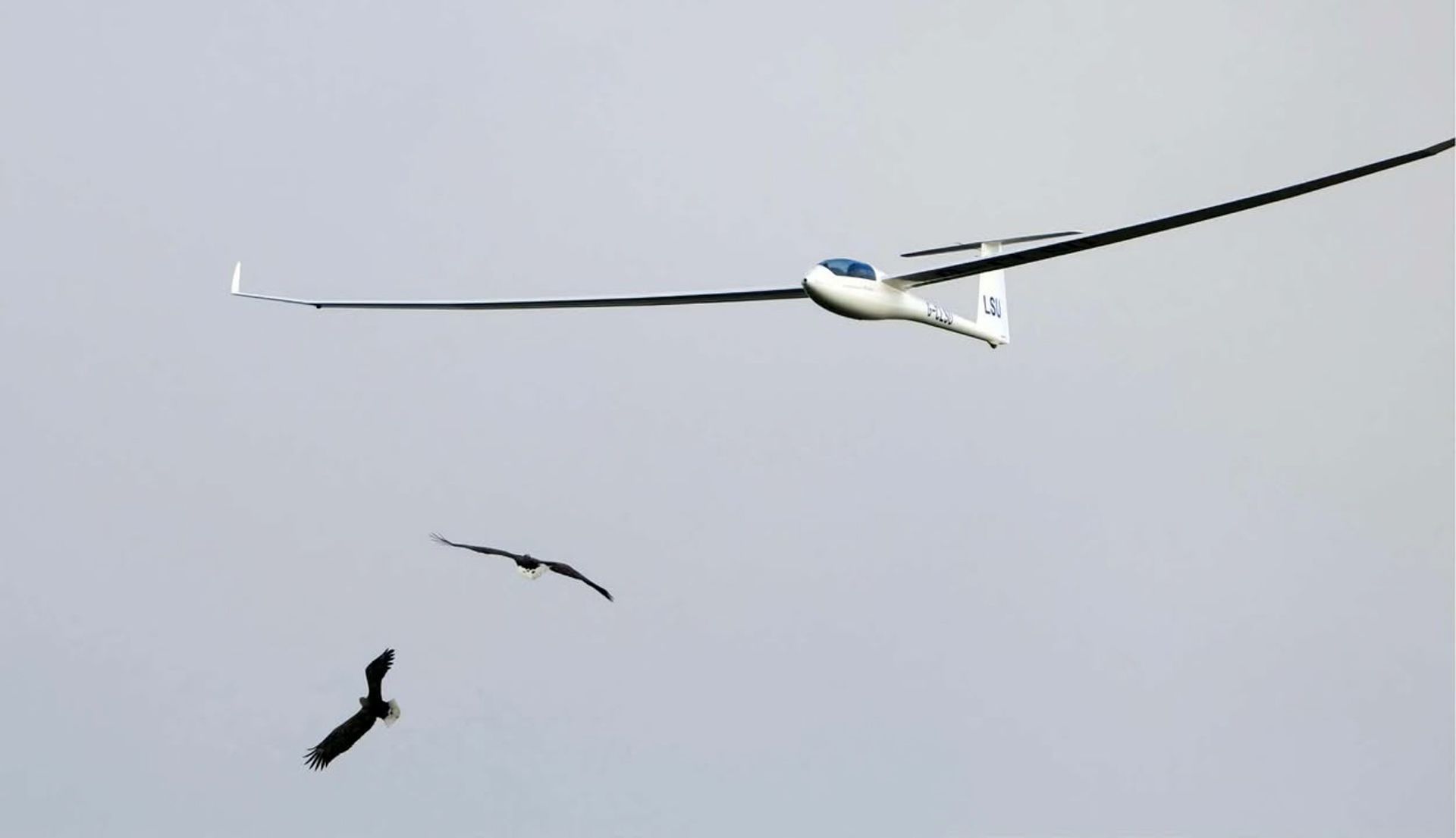
Soar with nature
Share the sky with birds of prey as you ride thermals above the Sussex countryside. After the tow rope releases, there's a moment of absolute silence - just the whisper of air over the wings and the landscape stretching to the horizon below you. Feel the gentle lift as a thermal carries you higher. This is what gliding is all about.
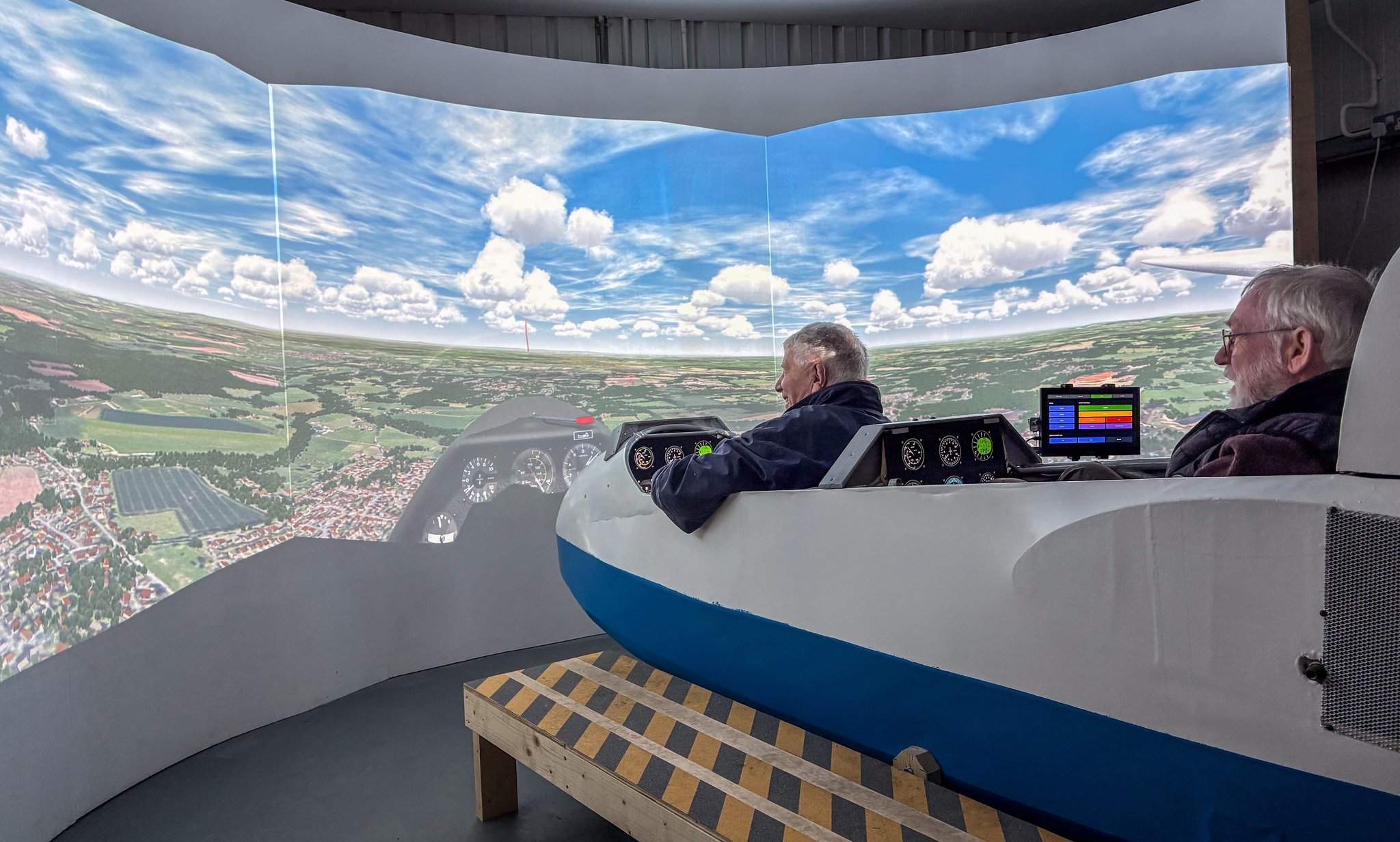
Train smarter
Our state-of-the-art flight simulator lets you practise landing patterns, emergencies and navigation in any weather. Build confidence and sharpen skills between your flying days.
"Gliders, sailplanes, they are wonderful flying machines. It's the closest you can come to being a bird."Neil Armstrong
From first flight
to licensed pilot
Begin Training
Start your flying lessons at Southdown. No medical needed for flights with an instructor - just turn up and begin. Your instructor will introduce you to the sailplane and the magic of unpowered flight above the South Downs.
First Solo & Gliding Certificate
After completing exercises 1-12 and obtaining your Pilot Medical Declaration, you'll take to the skies alone for the first time. Apply for your Gliding Certificate. This is a moment you'll never forget.
Complete Your Training
Continue with advanced turning, soaring, navigation and out-landings (landing safely in a field away from the airfield). Complete your theory exams. Your Chief Flying Instructor certifies your course completion.
Skill Test & Licence Application
Complete a skill test with a Flight Examiner. Don't worry - when your Chief Instructor puts you forward, you'll be ready. Submit your application and receive your lifetime pilot's licence from the Civil Aviation Authority (CAA).
Where Your Licence Takes You
Cross-Country Flying
Explore the skies above the South Downs, ride sea breeze fronts, and fly hundreds of kilometres on good days.
Competitions
Test your skills against other pilots in regional, national and international gliding competitions.
Become an Instructor
Give back to the sport by training the next generation of glider pilots at Southdown.
How long will it
really take?
The minimums are 15 hours and 45 launches - but what does that mean in calendar time? It depends less on natural talent and more on how often you fly.
First Solo
Full Licence
Key Factors
What does it cost?
As a volunteer-run club, Southdown keeps flying affordable. There are no instruction charges - you only pay for the flight itself.
All instruction at Southdown is provided by qualified volunteers at no charge.
Membership
Flying Costs
Typical Total Investment
Including membership, launches, glider hire, exams, and your lifetime CAA licence. Most students complete the full course with 80-120 launches over 12-24 months.
Straightforward
medical clearance
Getting medically cleared to fly is simpler than you might think. The requirements scale with your stage of training.
Flights with an Instructor
Nothing beyond the standard requirements set by the club. You can start flying with an instructor right away.
Solo Flight
A Pilot Medical Declaration is required, based on DVLA driving licence medical requirements. Get this sorted early.
Your Pilot's Licence
The same Pilot Medical Declaration applies. If you can hold a driving licence, you can very likely hold a pilot's licence.
"I'd never been in any aircraft before my first flight at Southdown. One year later I was flying solo above the Downs. It's the best thing I've ever done."Southdown member
What is the SPL - and
what can you do with it?
UK aviation regulation requires pilots of sailplanes to hold a Sailplane Pilot Licence. It's your gateway to a lifetime of flying.
A Lifetime Licence
Your licence is issued by the CAA and lasts for life. Once earned, it's yours forever - you just need to keep it valid through regular flying.
Pilot in Command
Fly as pilot in command of sailplanes and carry passengers. With additional training, extend your privileges to powered sailplanes and touring motor gliders.
Regulated Training
Training standards are set at national level, ensuring consistent, high-quality instruction across all UK gliding clubs.
What does the
training involve?
The course combines theory exams with practical flying instruction. Here's what you'll need to complete.
Flying Requirements
- Minimum 15 hours of flight instruction in sailplanes
- 10 hours of flights with an instructor, including navigation and out-landing training
- 2 hours of supervised solo flight time
- At least 45 launches completed
- Holders of a valid powered aircraft pilot licence can credit 10% of solo flying hours (max 7 hours)
Knowledge & Assessment
- Complete the theory syllabus across all exam topics
- Pass multi-choice exams delivered by the club
- Your Chief Instructor certifies course completion
- Complete a skill test with a Flight Examiner
- Submit your licence application to the CAA
The 17 Flying Exercises
Each exercise builds naturally on the last - your instructor guides you every step.
You don't need to complete the full course before flying solo. Once you've completed exercises 1-12, know the rules of the air, and have your medical in place - you're ready.
Complete Ex. 1-12
Master the core flying skills from familiarisation through to landing patterns, approaches and landings.
Medical & Rules
Have your Pilot Medical Declaration in place and demonstrate knowledge of the rules of the air.
Supervised Solo
Your instructor authorises your solo flights. Strong winds, crosswinds and more come after - it's all part of the journey.
Eight theory exam topics
The theory syllabus covers essential subjects for safe, competent flying. Study at your own pace through self-study, club lectures, and online resources.
Common Topics
Specific Topics
Safe operations,
safe flying
Safety runs through every aspect of your training. You'll be guided every step of the way by experienced volunteer instructors at Southdown.
Threat & Error Management
Learn to identify and manage threats before they become problems, including collision avoidance techniques.
Airfield Operations
Understand how to operate safely alongside other airfield and airspace users at Parham and beyond.
Out-Landing Skills
Learn how to safely select and land in fields away from the airfield - an essential skill for cross-country flying.
Training Records
Every exercise is recorded in detail, signed off by your instructor, ensuring nothing is overlooked.
Training top tips
Get Your Medical Sorted Early
Sort out your Pilot Medical Declaration as soon as you can - you'll need it before going solo and it's one less thing to worry about.
Fly Regularly
Try not to leave big gaps between training sessions. Regular flying accelerates your progress and keeps skills fresh.
Tackle Exams Early
Study for the theory exams sooner rather than later - one topic at a time. Spreading them out makes the workload very manageable.
Speak Up
If you're concerned about your progress or any aspect of training, don't suffer in silence - talk to your Chief Instructor or senior instructors. They're there to help.
Frequently asked
Is there an age limit?
You can fly solo at 14 and apply for your full SPL at 16. There's no upper age limit - gliding is about skill and judgement, not physical strength.
Am I the right size and shape to fly?
You need to fit comfortably in the cockpit and reach the controls. As a rough guide, you should be at least 1.42m (4'8") tall to reach the rudder pedals, and shorter than 1.88m (6'2") to fit under the canopy. The weight limit is 103kg (16st 3lb) for most of our gliders, and ballast can be added for pilots under around 50kg (8st). You don't need exceptional fitness - just enough mobility to climb in and out and operate the controls. If you're unsure, get in touch and we'll work it out together.
Can I fly with a disability or health condition?
Quite possibly. We've successfully taught deaf pilots, and several of our members fly solo with physical disabilities. If you're in any doubt about your health, or you have a physical disability, talk to your doctor or get in touch with us first - we'll work out what's possible. Note that minor illnesses, some prescription medications and recent blood donation will all temporarily make you unfit to fly.
What happens if the weather is bad?
If conditions aren't suitable, we don't fly - safety comes first. But grounded days aren't wasted: use the simulator, study theory, or learn from watching other pilots.
How do I pay for training?
Pay as you fly - no upfront course fees. Flights are billed at the end of the month, so you control your pace and budget. Spread costs over whatever timeframe suits you.
Can I fly if I wear glasses?
Absolutely. Many glider pilots wear glasses or contact lenses. Bring them along, always carry a readily accessible spare pair, and declare them on your medical paperwork when you progress to solo.
Do I need to keep flying after I qualify?
Your licence is for life, but to keep flying you need to maintain a minimum amount of recent experience - at least 5 hours and 15 launches over any rolling 24-month period, plus 2 flights with a qualified gliding instructor. It's easy to maintain if you fly regularly, and your club will help you stay current.
Do I need my own glider?
No. The club has a fleet of training gliders available to all members. Some pilots eventually buy their own, but it's entirely optional - many experienced pilots fly club aircraft for years.
Can I train more intensively?
Yes - we run mini courses for those who want to make rapid progress. These multi-day intensive blocks let you fly day after day, which dramatically accelerates your learning compared to flying once or twice a week. Get in touch to find out when the next one runs.
Can I bring someone to watch?
For introductory flights, absolutely - friends and family are welcome at Parham. There's a great view of the airfield and the South Downs, plus tea and coffee in the clubhouse. On regular training days, guests are welcome but must be supervised at all times as airfield safety is important.
Ready to Start
Your Flying Journey?
Southdown Gliding Club welcomes new members year-round. Book an introductory flight and experience the magic of soaring above the Downs.